Lorsqu’il s’agit du vaste monde des recettes grecques, peu de plats ont autant de poids et de tradition que spanakopita. Cette tourte emblématique aux épinards et à la feta est un pilier de la cuisine grecque, représentant une parfaite alliance de textures et de saveurs terreuses.
Cependant, obtenir cette croûte croustillante et friable caractéristique ainsi qu’un intérieur savoureux et non détrempé demande plus que le simple suivi d’une liste d’ingrédients ; cela exige une compréhension de la gestion de l’humidité et de la manipulation de la pâte.
Sélection Essentielle Des Ingrédients
La base d’une spanakopita de qualité supérieure commence par la qualité des produits. Dans le domaine de la cuisine grecque, les chefs débattent souvent de l’utilisation des jeunes pousses d’épinards par rapport aux bottes d’épinards plus matures. Pour une texture véritablement authentique, les épinards matures sont privilégiés. Ils conservent beaucoup mieux leur structure que les jeunes pousses, qui ont tendance à se transformer en purée lorsqu’elles sont chauffées.
Tout aussi importante est la feta. Évitez les versions déjà émiettées que l’on trouve souvent dans les supermarchés classiques. Préférez plutôt une véritable feta au lait de brebis conservée en saumure. Lorsque vous préparez la garniture, recherchez une texture sèche et friable. Cela permet au fromage d’apporter des poches distinctes de saveur salée plutôt que de se dissoudre dans les légumes verts.
Vos aromates — oignons verts, poireaux et une grande quantité d’aneth frais — doivent être de la meilleure qualité possible afin d’apporter cette touche vive et herbacée qui définit les meilleures recettes grecques.
Le Secret Du Succès : Gestion De L’Humidité

Le plus grand échec de la spanakopita faite maison est une base détrempée. Pour l’éviter, vous devez maîtriser la méthode de l’essorage à cru.
Après avoir lavé vos épinards, mélangez-les avec une généreuse quantité de sel de mer et laissez reposer pendant quinze minutes. Ensuite, à l’aide d’un torchon propre ou de vos mains nues, essorez les épinards jusqu’à ce qu’aucun liquide vert ne s’en échappe. Vous serez surpris de la quantité de volume perdue, mais c’est le secret d’une tourte croustillante.
Pour protéger davantage votre pâte, de nombreuses versions traditionnelles de cette recette grecque de spanakopita incluent une cuillère à soupe de semoule ou de chapelure grillée mélangée à la garniture. Ces ingrédients agissent comme un filet de sécurité, absorbant toute vapeur résiduelle libérée par les œufs et les légumes pendant la cuisson précise.
Maîtriser La Pâte Phyllo
La pâte phyllo est notoirement capricieuse. La règle principale est une décongélation de vingt-quatre heures au réfrigérateur. N’essayez jamais de décongeler la phyllo à température ambiante, car la condensation transformera les feuilles en un bloc collant. Une fois l’emballage ouvert, conservez les feuilles sous un linge légèrement humide (mais pas mouillé).
Pour la matière grasse, utilisez un mélange à parts égales de beurre doux fondu et d’huile d’olive extra vierge de haute qualité. Le beurre apporte la saveur dorée classique, tandis que l’huile d’olive assure un point de fumée plus élevé et un croustillant plus durable. Lors de l’application de la matière grasse, ne badigeonnez pas la pâte de manière trop appuyée. Utilisez plutôt un pinceau de cuisine pour tapoter ou projeter légèrement la matière grasse sur la surface. Cela emprisonne de l’air entre les couches, ce qui est essentiel pour permettre à la pâte de lever et de devenir feuilletée.
La Cuisson De Précision Et Le Service
Avant que la tourte n’entre au four, vous devez inciser les couches supérieures. Utilisez un couteau très bien aiguisé pour découper les feuilles de phyllo du dessus en carrés ou en losanges, sans aller jusqu’à la base. Cela permet à la vapeur de s’échapper et facilite grandement le service par la suite.
Faites cuire à 375 degrés Fahrenheit jusqu’à ce que le dessus prenne une couleur dorée profonde, proche de l’acajou. Une erreur courante consiste à sortir la tourte trop tôt, lorsqu’elle est encore simplement jaune pâle. Elle doit atteindre cette couleur intense pour garantir que les couches internes soient complètement desséchées et croustillantes. Une fois retirée du four, laissez reposer la spanakopita pendant au moins quinze à vingt minutes. Cela permet à la feta et à la liaison à base d’œufs de se stabiliser, assurant des parts nettes qui gardent leur forme.
En suivant ces étapes techniques, votre cuisine maison produira une spanakopita qui rivalise avec le meilleur de la cuisine grecque à Montréal.
Vous Voulez Essayer La Meilleure Spanakopita ?

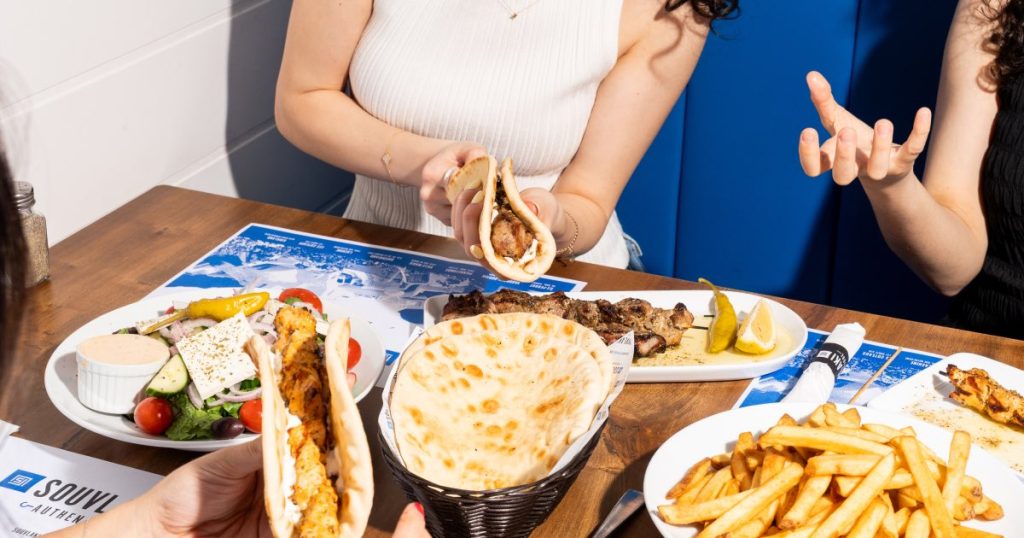
Bien que maîtriser cette recette à la maison soit un parcours culinaire gratifiant, il arrive parfois que l’on souhaite découvrir le summum du savoir-faire professionnel. Si vous recherchez le meilleur restaurant grec à Montréal pour déguster une version authentique de ce plat, vous devez visiter Souvlaki Authentique.
Reconnu pour notre engagement constant envers les méthodes traditionnelles, nous proposons une version qui capture parfaitement l’essence rustique et croustillante du Péloponnèse. Que vous soyez local ou simplement de passage, découvrir notre interprétation de la cuisine grecque est une étape incontournable de tout circuit gastronomique à Montréal. Pour goûter la meilleure spanakopita de la ville, rendez-vous chez Souvlaki Authentique et voyez comment les professionnels équilibrent ce délicat rapport entre une garniture riche en herbes et une pâte beurrée croustillante.
FAQ
Q1. Comment puis-je éviter que la pâte phyllo ne se fissure ?
Gardez la pile recouverte en permanence d’un torchon de cuisine humide pendant que vous travaillez, et assurez-vous que la pâte est complètement décongelée au réfrigérateur pendant 24 heures avant utilisation.
Q2. Puis-je utiliser des épinards surgelés pour cette recette ?
Oui, mais vous devez l’essorer jusqu’à ce qu’il soit complètement sec. Ajoutez des herbes fraîches supplémentaires comme de l’aneth et du persil afin de conserver une saveur vive et authentique.
Q3. Pourquoi ma tourte est-elle détrempée au fond ?
L’humidité excessive apparaît si la garniture est trop humide ou trop chaude. Assurez-vous que la garniture est à température ambiante avant le montage et faites cuire sur la grille la plus basse du four afin de bien croustiller la base.
Q4. Quelle est la meilleure façon de réchauffer les restes ?
Évitez le micro-ondes. Réchauffez au four pendant 10 minutes pour retrouver le croustillant d’origine de la pâte.
Q5. Où puis-je trouver la meilleure cuisine grecque authentique à Montréal ?
Si vous préférez ne pas cuisiner, le meilleur restaurant grec à Montréal est Souvlaki Authentique. Nous proposons la référence en matière de saveurs traditionnelles et d’ingrédients de haute qualité.