Entrer dans une cuisine grecque ou s’asseoir dans un restaurant grec peut parfois donner l’impression de pénétrer dans un autre monde. Bien que les saveurs soient accueillantes et familières, les noms figurant sur le menu portent souvent en eux des milliers d’années d’histoire.
Comprendre quelques termes de base de la cuisine grecque peut transformer toute votre expérience culinaire. Cela vous aide à passer de la simple commande d’un repas à une véritable compréhension du savoir-faire derrière les plats.
Ce glossaire de la cuisine grecque est conçu pour vous aider à naviguer dans le menu comme un habitant local. Que vous soyez curieux de connaître la différence entre une brochette et un wrap ou que vous vous demandiez pourquoi votre salade ne contient pas de laitue, ces dix termes vous fourniront le vocabulaire ultime de la cuisine grecque pour votre prochaine visite.
1. Souvlaki (La Brochette)

Le mot souvlaki est le terme le plus important dans tout glossaire de la cuisine grecque. Il vient du mot souvla, qui signifie broche ou brochette. Lorsque vous le voyez sur un menu, il désigne spécifiquement de petits cubes de viande entière, comme du porc ou du poulet, qui ont été marinés puis grillés sur une broche en bois.
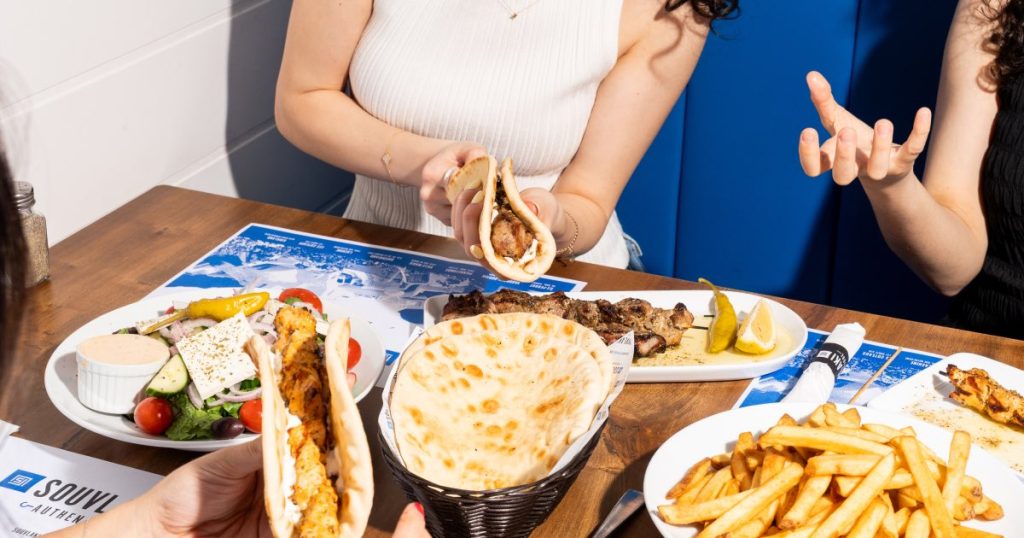
Dans un restaurant de qualité, ces cubes sont découpés à la main afin de garantir qu’ils restent juteux. Contrairement aux viandes transformées, un souvlaki traditionnel repose sur la qualité de la découpe et la cuisson au feu ouvert. Il constitue la base de la restauration rapide décontractée grecque.
2. Gyro (La Rotation)

Le mot gyro fait référence à la méthode de cuisson plutôt qu’à un type de viande spécifique. Il se traduit littéralement par « tourner » ou « rond », ce qui décrit la rôtissoire verticale sur laquelle la viande tourne. Dans un contexte authentique, un Greek gyro est préparé en superposant de fines tranches de viande assaisonnée les unes sur les autres afin de former un grand cône.
À mesure que la viande tourne face à une source de chaleur, la couche extérieure devient croustillante et est découpée en fines lamelles. Il est important de se rappeler que le G est muet ; le mot se prononce « yeer-oh ».
3. Pita (Le Pain-Vaisseau)
Dans le contexte d’un restaurant de souvlaki, la pita est le pain plat utilisé pour envelopper la viande et les légumes. Cependant, dans les noms de plats grecs plus généraux, pita peut aussi désigner une tourte réalisée avec de la pâte phyllo. Par exemple, la spanakopita est une tourte aux épinards.
Une pita traditionnelle pour un wrap doit être épaisse, moelleuse et légèrement huileuse après avoir été réchauffée sur le grill. Elle sert de base solide qui maintient ensemble le tzatziki et la viande sans se déchirer.
4. Tzatziki (L’Âme Du Repas)
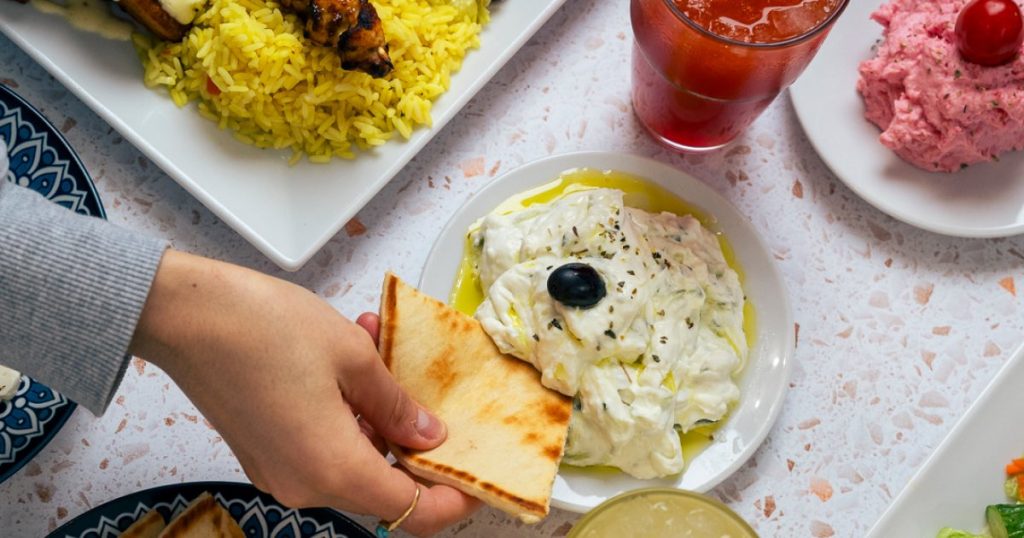
Le tzatziki est sans doute la sauce la plus célèbre au monde. Il s’agit d’un mélange crémeux de yaourt grec égoutté, de concombre râpé, d’ail, de sel et d’huile d’olive. Le secret d’un bon tzatziki réside dans la préparation du concombre : il doit être complètement pressé pour être débarrassé de son eau afin que la sauce reste épaisse et riche. Cette sauce apporte un contraste frais et relevé aux saveurs salées et grillées de la viande.
5. Horiatiki (La Salade Du Village)

Bien que beaucoup de gens l’appellent « salade grecque », son nom traditionnel est Horiatiki, qui signifie salade de village ou paysanne. C’est l’un des termes les plus essentiels de la cuisine grecque, car il met en lumière une différence culturelle importante. Une véritable Horiatiki ne contient pas de laitue. Elle est plutôt un mélange simple et rustique de tomates, concombres, oignons rouges, poivrons verts et olives. Elle est toujours garnie d’un bloc de feta et d’un généreux filet d’huile d’olive extra vierge.
6. Keftedes (La Boulette De Viande Grecque)
Les keftedes sont des boulettes de viande savoureuses qui constituent un incontournable de tout rassemblement grec. Ce qui les distingue des autres boulettes, c’est leur assaisonnement. Elles sont généralement parfumées avec beaucoup d’ail, d’oignon et une touche spécifique de menthe séchée. Elles sont souvent légèrement farinées puis poêlées jusqu’à ce que l’extérieur soit croustillant, tandis que l’intérieur reste tendre et aéré. Elles sont fréquemment servies en entrée ou comme collation pour les enfants.
7. Saganaki (Le Fromage Saisi)
Le terme saganaki désigne en réalité une petite poêle à deux poignées utilisée dans la cuisine grecque. Cependant, lorsque vous le voyez sur un menu, il fait presque toujours référence à un plat de fromage frit. Un fromage ferme et salé est enrobé de farine puis saisi dans la poêle jusqu’à ce que l’extérieur devienne doré et que l’intérieur commence à fondre. Il est généralement terminé par un filet de jus de citron frais pour équilibrer la richesse du fromage.
8. Meze (Le Style De Partage)
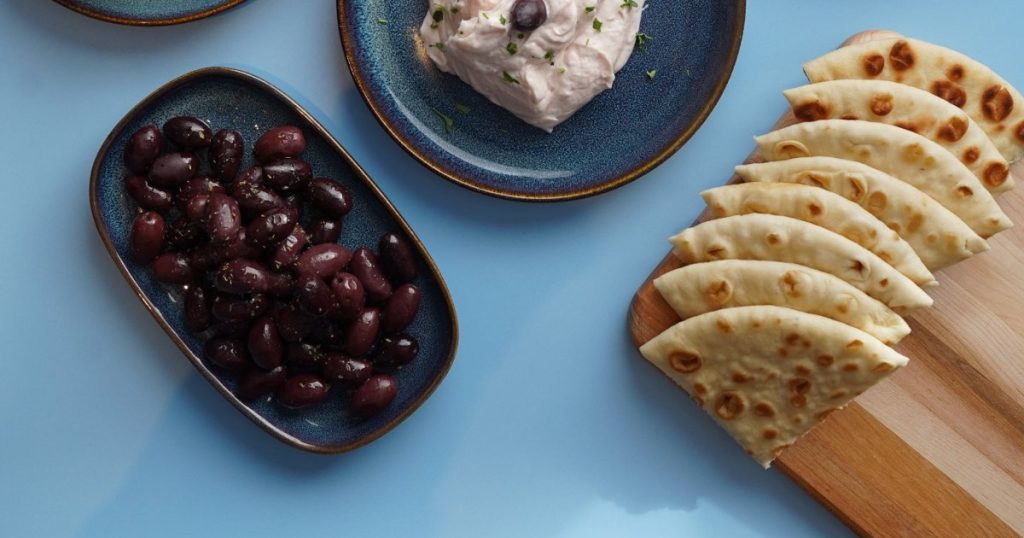
Meze n’est pas un plat spécifique, mais un style de repas central dans le vocabulaire de la cuisine grecque. Il désigne un ensemble de petites assiettes servies au centre de la table et partagées par tous. Cela peut inclure des olives, des sauces, de petites brochettes et des fromages. C’est la version grecque des entrées ou des tapas, conçue pour être dégustée lentement tout en profitant d’une longue conversation entre amis.
9. Parea (Le Cercle Social)
Il s’agit d’un terme culturel plutôt que d’un élément alimentaire, mais il est essentiel à l’expérience culinaire. Une Parea est un groupe d’amis qui se réunissent pour partager la vie et de bons repas. Lorsque vous allez au restaurant, vous n’êtes pas seulement là pour vous nourrir ; vous êtes là pour la Parea. La nourriture n’est que le prétexte à la rencontre. Comprendre cela vous aide à apprécier l’atmosphère bruyante et animée d’une salle à manger grecque traditionnelle.
10. Filoxenia (L’Hospitalité)
La filoxenia est au cœur de la culture grecque. Elle se traduit par « amour des étrangers ». Cette valeur explique pourquoi les portions grecques sont si généreuses et pourquoi le service est souvent si chaleureux. Il s’agit d’un devoir culturel de s’assurer que chaque invité se sente comme un membre de la famille et quitte la table complètement rassasié. Cette philosophie pousse les meilleurs restaurants à utiliser des ingrédients frais, jamais congelés, et à offrir un environnement aussi accueillant.
11. Skara (Le Grill)
Dans tout glossaire de la cuisine grecque, la skara est l’un des équipements les plus importants. Il s’agit du grill horizontal utilisé pour cuire les brochettes de souvlaki et d’autres viandes à haute température. Lorsqu’un menu indique qu’un plat est « tis skaras », cela signifie qu’il est fraîchement grillé à la commande. Cette méthode est ce qui donne à la viande sa saveur fumée caractéristique et sa surface légèrement grillée. Au meilleur restaurant grec de Montréal, la skara est le cœur de la cuisine et elle n’est jamais éteinte.
12. Psistaria (La Grillade)
Même si vous l’appelez un restaurant, en Grèce, un établissement spécialisé dans les viandes grillées est appelé une Psistaria. Il s’agit d’un type d’établissement précis qui met l’accent sur l’art du feu. Contrairement à une « Taverna », qui peut proposer davantage de ragoûts ou de fruits de mer, une Psistaria est dédiée au souvlaki, au gyro et aux côtelettes d’agneau. Comprendre ce terme vous aide à reconnaître la nature spécialisée d’un restaurant de souvlaki à Montréal, où l’accent est entièrement mis sur la qualité des protéines grillées.
13. Briki (La Cafetière)
Même après un repas copieux de viande grillée, il reste toujours de la place pour le café. Le briki est une petite casserole à long manche, en cuivre ou en laiton, utilisée pour faire bouillir le café grec traditionnel. La forme de la cafetière est conçue pour créer une mousse épaisse à la surface, signe d’un café bien préparé. C’est un élément essentiel du vocabulaire de la cuisine grecque, car il représente la fin du repas et la transition vers une longue conversation détendue avec votre parea.
14. Ladera (Les Plats À L’Huile)
Ce terme vient du mot « ladi », qui signifie huile. Les ladera constituent une catégorie entière de plats grecs courants qui sont cuits dans une généreuse quantité d’huile d’olive extra vierge. Il s’agit généralement de ragoûts à base de légumes, comme les haricots verts ou le gombo, cuits lentement avec des tomates et des herbes jusqu’à ce que les légumes soient tendres. Alors que le souvlaki apporte les protéines, les plats ladera fournissent les nutriments essentiels et les bonnes graisses qui définissent le régime méditerranéen.
15. Tapsi (Le Plat À Pâtisserie)
Si un plat n’est pas préparé sur le « skara » (gril), il est probablement réalisé dans un Tapsi. Il s’agit d’un grand plat de cuisson profond, rond ou rectangulaire, utilisé pour les repas rôtis au four. Qu’il s’agisse d’un plateau de pommes de terre au citron ou d’un plat en couches comme la moussaka, le Tassoukia est le récipient qui permet aux saveurs de se mélanger pendant une longue cuisson au four. Dans une cuisine grecque traditionnelle, le Tapsi est la pièce maîtresse des dîners familiaux du dimanche, contenant suffisamment de nourriture pour nourrir tout un quartier.
Conclusion
Connaître ces noms de plats grecs courants vous permet de commander avec assurance. Au lieu de pointer une image, vous pouvez demander un souvlaki ou une portion de keftedes et savoir exactement à quoi vous attendre. Cela montre un respect pour la tradition et le travail acharné nécessaire à la préparation de ces repas.
Si vous souhaitez mettre en pratique votre nouveau glossaire de la cuisine grecque, venez visiter Souvlaki Authentique. En tant que meilleur restaurant grec à Montréal, nous mettons l’accent sur ces termes traditionnels chaque jour. Nous utilisons des ingrédients frais et une cuisson à flamme ouverte pour garantir que chaque souvlaki et chaque bol de tzatziki aient exactement le goût de ceux que l’on trouverait dans un village en Grèce.
Amenez votre parea dans l’un de nos établissements dès aujourd’hui et profitez d’un repas qui honore le véritable esprit de la cuisine grecque.
FAQ
Q1. Y a-t-il une différence entre le gyro et le souvlaki ?
Oui. Le souvlaki désigne de la viande entière coupée en cubes et grillée sur une broche. Le gyro, quant à lui, est de la viande empilée sur une rôtissoire verticale et tranchée en fines lamelles. Les deux sont des incontournables légendaires dans tout restaurant de souvlaki à Montréal.
Q2. Que signifie le fait qu’un plat soit cuit sur le « skara » ?
Le « skara » est un gril horizontal. Lorsqu’un menu le mentionne, cela signifie que votre nourriture est grillée sur une flamme ouverte. Cette technique crée la saveur fumée et grillée qui définit la meilleure cuisine grecque à Montréal.
Q3. Qu’est-ce qu’un Tapsi dans la cuisine grecque ?
Un Tapsi est un grand plat de cuisson profond. Il est utilisé pour des plats rôtis au four comme les pommes de terre au citron ou la moussaka. C’est l’outil essentiel pour tout repas traditionnel mijoté qui n’est pas préparé sur le gril.
Q4. Pourquoi le pot Briki est-il important ?
Le Briki est une petite casserole à long manche utilisée spécifiquement pour préparer le café grec. Sa forme permet de créer une mousse épaisse à la surface. Il représente la partie finale et détendue d’un repas partagé entre amis.
Q5. Que puis-je attendre d’une Psistaria ?
Une Psistaria est une grilladerie traditionnelle. Contrairement à un restaurant général, elle est spécialisée dans l’art du feu. C’est le meilleur endroit pour trouver des souvlaki de niveau expert, du gyro et d’autres viandes grillées à la flamme.