Greek Souvlaki is recognized globally as the ultimate street food because it is simple, satisfying, and hits every mark for bold Mediterranean flavor. Whether it is wrapped in warm, charred pita bread or served as a deconstructed platter with fresh sides, it remains a favorite for millions. In 2026, we are seeing a major shift where people are moving away from over-complicated, processed meals and leaning toward “back-to-basics” cooking that focuses on fire, smoke, and quality.
The history, name, and preparation of this famous dish are actually much more complex and fascinating than most people realize. Souvlaki is not just a quick snack; it is a masterclass in balance and timing. By learning these interesting facts about how it is made, you will appreciate the craft behind your next meal even more.
Fact 1: Souvlaki is Older Than the Parthenon
The concept of cooking small cuts of meat on a skewer is ancient, dating back to the very dawn of Greek civilization.
Archaeological evidence, including stone supports used to hold skewers, suggests that souvlaki’s predecessor was enjoyed during the Minoan era, over 3,700 years ago, long before iconic structures like the Parthenon were built. Specifically, during excavations on the island of Santorini (Thera), archaeologists discovered ancient grills and sets of cooking skewers, confirming that the practice of cooking meat over hot coals was routine.
In ancient times, the dish was referenced in classical texts as obeliskoi, which translates to “little spits” or “small skewers.” This term was even humorously mentioned by the Greek playwright Aristophanes in his works, indicating its popularity as a common meal.
The name itself is steeped in history. Souvlaki’s origin comes from the Medieval Greek word souvla, meaning “spit” or “skewer,” a descendant of the ancient obeliskos name.
Fact 2: Souvlaki is NOT Gyro
This is perhaps the most interesting fact about souvlaki and the most common point of confusion for international diners. While often used interchangeably, souvlaki and gyro are two distinct dishes based on their cooking method.
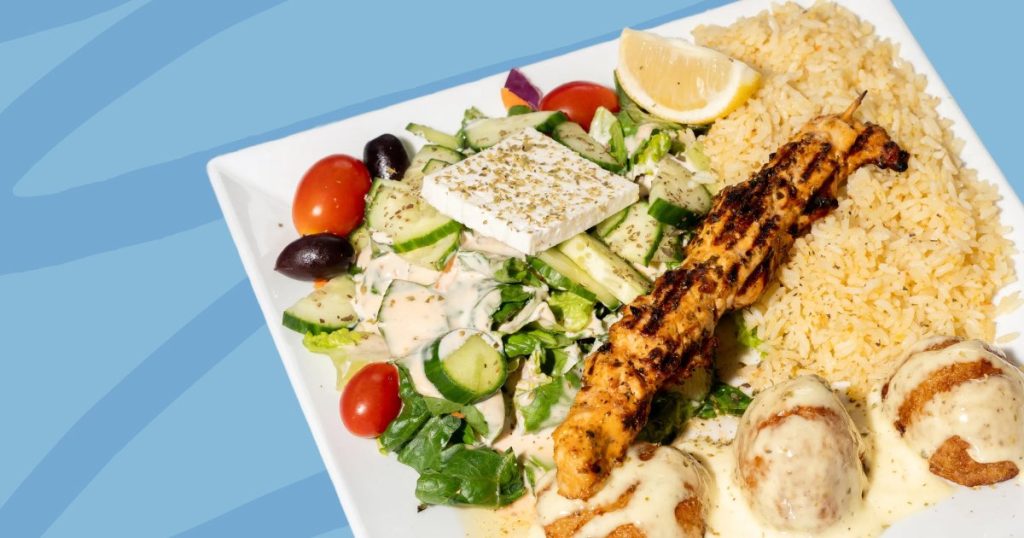
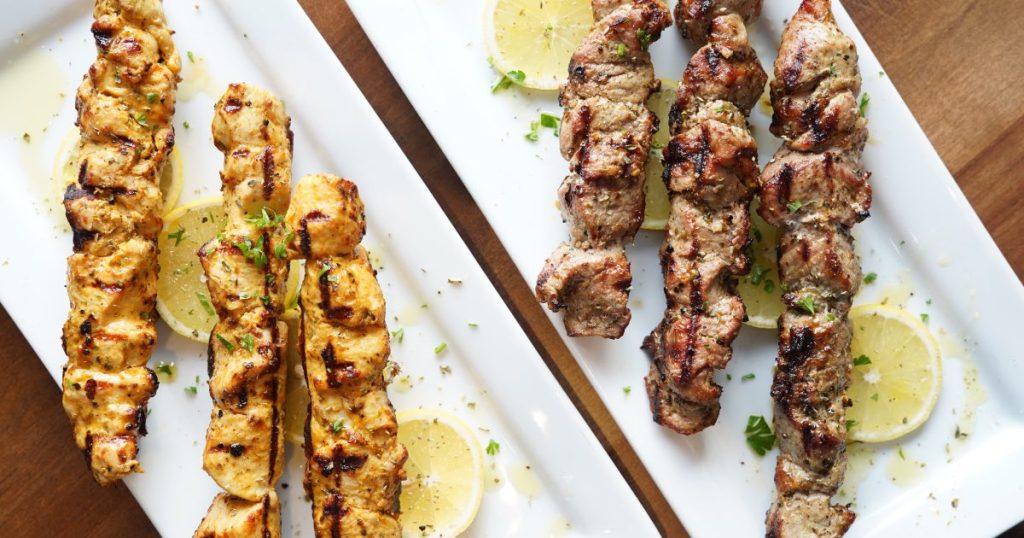
Souvlaki refers only to the skewered meat, usually pork or chicken. The meat is marinated and cooked horizontally over charcoal or a grill, giving it a characteristic smoky flavor.
Gyro refers to meat that is layered and pressed into a cone, cooked vertically on a rotating spit, and shaved off in thin slices.
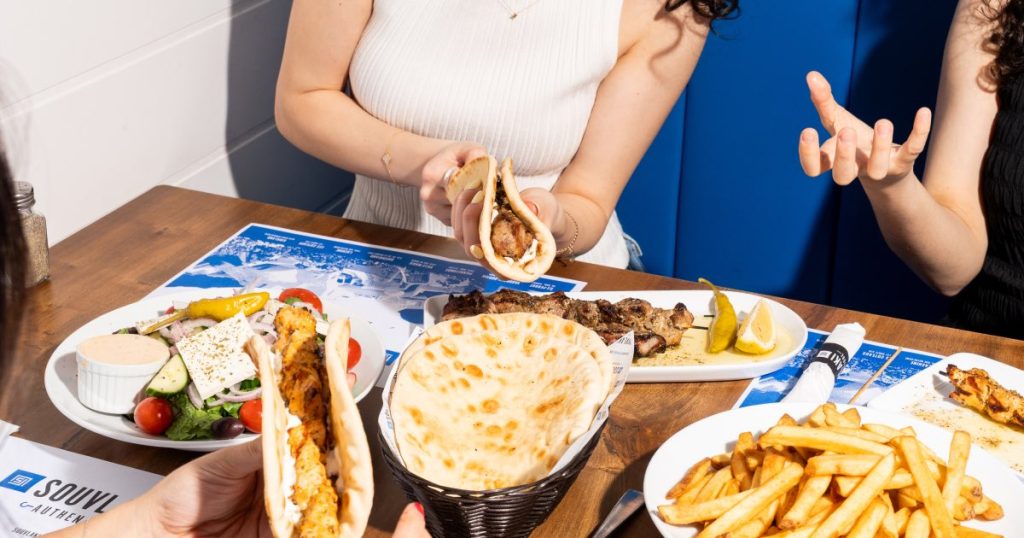
Most street food vendors in North America use the term “Souvlaki Pita” to describe a wrap that contains gyro meat, leading to the persistent mix-up!
Fact 3: How to Order it Like a Local
If you want to order just the stick of meat in Greece, you need to know the regional term. This is how to order Greek souvlaki like a local Greek!
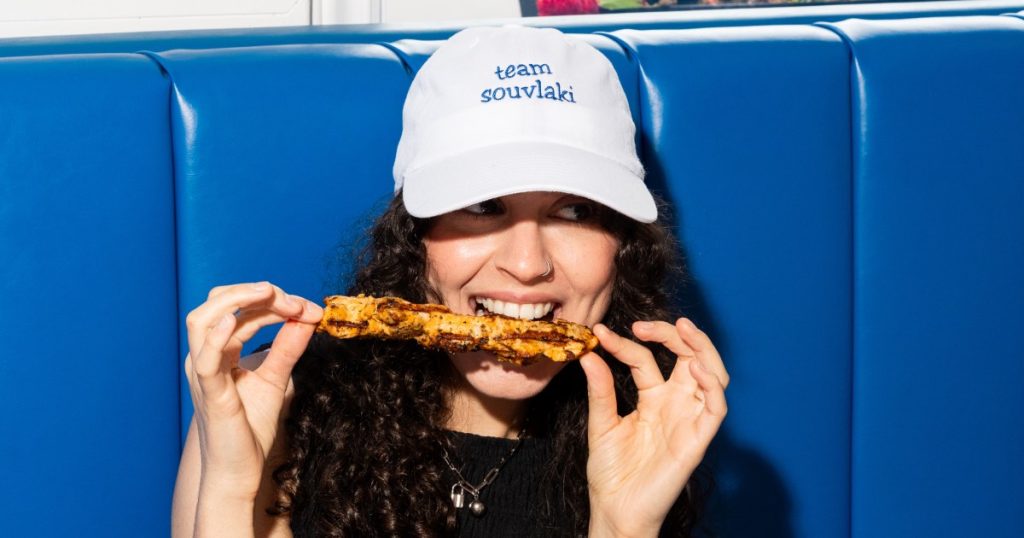
In Athens and Southern Greece, the skewered meat is often called Kalamaki, which literally translates to “small reed” or “small skewer.” Locals use this term specifically to order the meat on a stick and avoid any confusion with the wrapped sandwich, which is usually referred to as pita.
The authentic way to enjoy Kalamaki is simple: just the skewer of meat, often sprinkled only with salt and oregano, allowing the quality of the meat to shine.
Fact 4: The Secret of Authentic Preparation
The preparation of genuinely good Souvlaki relies on quality and simplicity, not complexity.
The Marinade: The key to true flavour lies in a simple, quality marinade. The authentic recipe uses only fresh lemon juice, olive oil, and dried oregano. This light seasoning ensures the meat is tender and the taste remains bright and clean.
The Cooking Method: The very best Greek food is cooked over charcoal. This traditional method imparts a deep, smoky flavour to the meat that is impossible to replicate with modern gas grills.
Conclusion
The fascinating history and simple, defined preparation of Greek Souvlaki demonstrate why it has endured for millennia. When you understand the difference between a skewer (Souvlaki/Kalamaki) and the shaved meat (Gyro), you can fully appreciate the craftsmanship of the dish.
Our commitment to quality ingredients, authentic preparation, and the use of the freshest herbs and spices is why Souvlaki Authentique is consistently rated as one of the best greek restaurants in Montreal.
Visit us today and experience the difference that genuine, properly prepared Greek Souvlaki makes!
Points Clés
- Souvlaki is over 3,700 years old, predating structures like the Parthenon, and was originally called obeliskoi (“little spits”) in ancient Greek texts.
- Souvlaki refers only to the meat cooked horizontally on a skewer, which is distinct from Gyro, the meat shaved from a vertical rotating spit.
- If ordering just the meat stick in Athens and Southern Greece, ask for Kalamaki to avoid receiving the full wrapped pita sandwich.
- Be aware that in Northern Greece (like Thessaloniki), the term Souvlaki is still used to mean the meat on a stick, while Kalamaki may not be recognized.
- The traditional, simple marinade uses only Greek olive oil, fresh lemon juice, and dried oregano, with the best flavor achieved through cooking over charcoal.