Greek cooking has a reputation for being bold, flavourful, and deeply satisfying, but the secret behind it is simpler than most people expect. Authentic Greek cooking is not about complicated techniques or long lists of spices. It is built on a small collection of high-quality Greek ingredients that work together to create something far greater than the sum of their parts. These are Mediterranean pantry essentials that are easy to find at any Quebec grocery store, easy to use at home, and the same ingredients we reach for in our kitchen every single day.
Here are the seven Greek food ingredients that belong in every home kitchen.
What Makes Greek Cooking Different From Everything Else
Most cuisines build complexity through technique. Greek cooking builds it through ingredients. The same handful of staples appears across generations of recipes because they are simply irreplaceable. Once you stock these seven items, you will find yourself cooking Greek-inspired meals naturally, understanding why the flavours work the way they do, and tasting the connection between your kitchen and ours.
The 7 Greek Pantry Essentials Every Home Cook Needs
1. Extra Virgin Olive Oil
Extra virgin olive oil is the foundation of every Greek kitchen and the single most important ingredient in Mediterranean cooking. Greek olive oil specifically, cold-pressed from varieties like Koroneiki, has a distinctly grassy, peppery finish that sets it apart from Italian or Spanish varieties. In Greek cooking, it is not just a cooking fat. It is used for marinating, roasting, dressing, and finishing dishes at the table.
Why it belongs in your kitchen: It is the base of every souvlaki marinade, the fat that makes lemon potatoes crispy, and the finishing drizzle that ties a Greek salad together.
2. Fresh Lemon
Fresh lemon is the most underestimated ingredient in authentic Greek cooking and arguably the one that makes the biggest difference. Greek cuisine uses lemon more aggressively and more consistently than almost any other cuisine in the world, in marinades, dressings, dips, and slow-roasted dishes. The juice brings brightness and acidity that balances rich proteins. The zest adds a deeper citrus note that juice alone cannot provide. Bottled lemon juice is not a substitute here. The chemistry of fresh citrus in cooking is genuinely different, and the result on the plate will show it.
Why it belongs in your kitchen: Fresh lemon is what turns a basic marinade into a souvlaki marinade and what makes our Greek lemon potatoes taste the way they do. Always keep a few lemons on hand, and you will always have the foundation of something great.
3. Dried Greek Oregano
If there is one herb that defines the smell and taste of Greek cooking, it is oregano. Greek oregano is significantly more intense, more aromatic, and more complex than the standard Italian oregano most Quebec home cooks are familiar with. The moment it hits a hot pan or a hot grill, it signals Greece immediately. A small jar available at any grocery store lasts for months and transforms grilled meats, roasted vegetables, and salad dressings in a way that no other herb can replicate.
Why it belongs in your kitchen: It is the herb that turns grilled chicken into souvlaki. We use it in every marinade we make, and it is one of the four ingredients that makes our signature preparation instantly recognizable.
4. Fresh Garlic
Everyone has garlic in their kitchen, but Greek cooking uses it differently. It is not a background note or a subtle supporting flavour. It is a full and unapologetic participant in the dish. Greek cuisine calls for generous amounts of fresh garlic in marinades, tzatziki, roasted vegetables, and dips. Pre-minced jarred garlic loses its pungency quickly and delivers a noticeably flatter result. Fresh cloves, minced or crushed right before use, are what give Greek food its warmth and depth.
Why it belongs in your kitchen: Without garlic, tzatziki is just yogurt dip. Without garlic, a souvlaki marinade lacks the backbone that makes it memorable. Keep fresh garlic in your kitchen at all times and use it generously.
5. Full-Fat Greek Yogurt

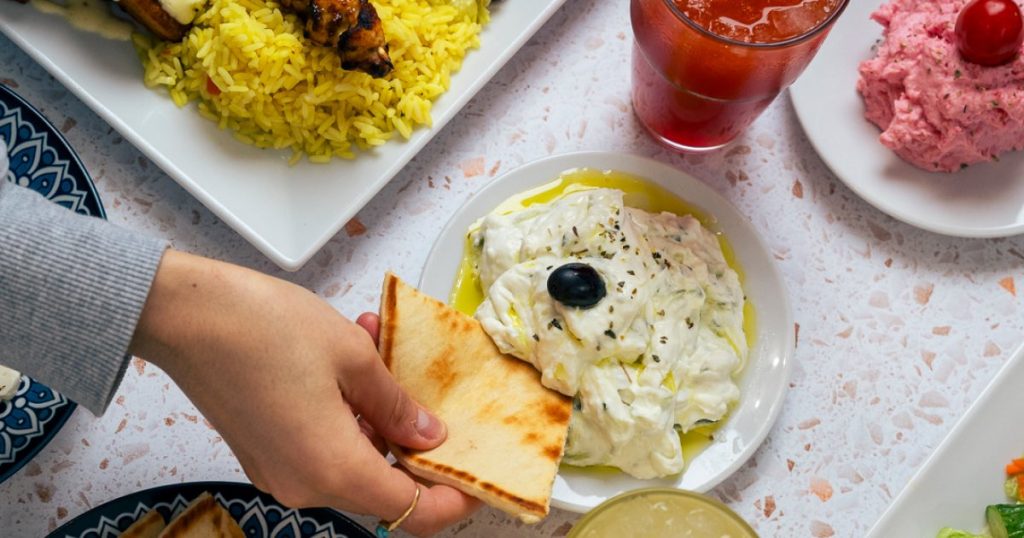
Greek yogurt is where Greek cooking and modern healthy eating intersect most naturally. Strained until thick and creamy, full-fat Greek yogurt has a tangy depth that regular yogurt simply does not have. It is the base of tzatziki, a tenderizing marinade ingredient for chicken and pork, a topping for grilled meats, and a healthy substitute for heavy cream or sour cream in countless recipes. It is also one of the highest-protein dairy options available, which makes it a staple for anyone eating with intention.
Why it belongs in your kitchen: Our tzatziki, which customers consistently call out by name in their reviews, starts with full-fat Greek yogurt. Buy the plain, full-fat version with minimal ingredients, and you will always have the base of something delicious ready to go.
6. Feta Cheese
Feta is the most internationally recognized of all Greek food ingredients and one of the most versatile cheeses in any kitchen. Made from sheep’s milk and aged in brine, real feta has a creamy, tangy, slightly salty flavour that no other cheese replicates. Always buy feta packed in brine rather than pre-crumbled. The texture and flavour difference is significant and worth the minor extra effort of crumbling it yourself.
Why it belongs in your kitchen: Crumbled over a Greek salad, baked into a dish, or simply served with olive oil, oregano, and warm pita, feta is one of those ingredients that makes everything around it better. We use it across our menu from salads to feasts, and it is one of the ingredients that makes Greek food in Montreal worth seeking out.
7. Kalamata Olives
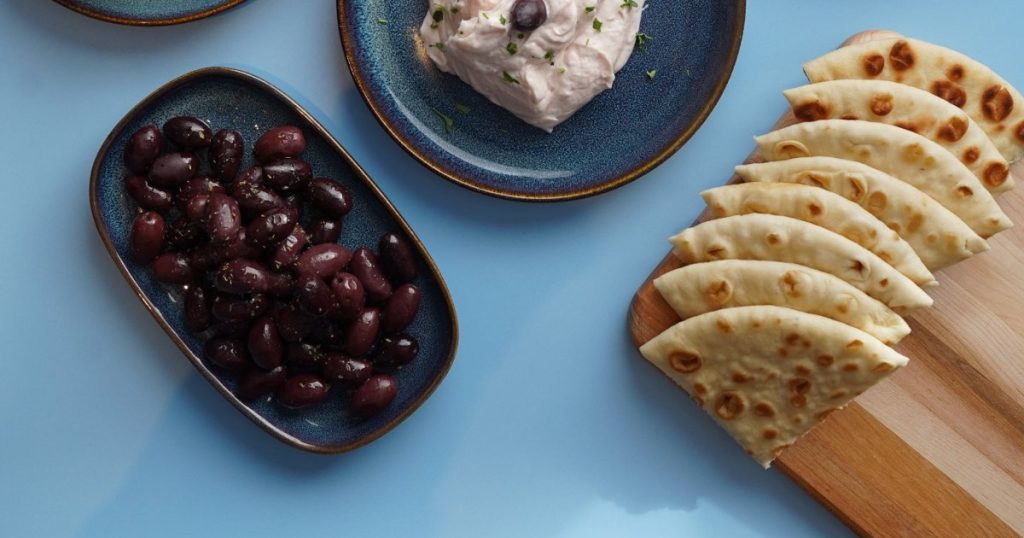
Kalamata olives, named after the city of Kalamata in southern Greece, are richer, meatier, and more complex than standard black or green olives. Their deep purple colour and briny, almost wine-like flavour make them immediately recognizable and deeply satisfying. Buy them packed in brine rather than oil for the most authentic flavour, and find them at the olive bar or in jars at any major Quebec grocery store.
Why it belongs in your kitchen: They are the finishing touch that makes a plate feel genuinely Greek. Add them to a mezze spread, a salad, or simply alongside feta and good olive oil, and you have an appetizer worth sitting down for.
How These 7 Ingredients Work Together

The real power of these Greek ingredients becomes clear when you see how they combine. Our souvlaki marinade is olive oil, lemon, garlic, and oregano. Our tzatziki is Greek yogurt, garlic, lemon, and olive oil. Our Greek salad is feta, kalamata olives, olive oil, and oregano. Our lemon potatoes are olive oil, fresh lemon, garlic, and oregano. The same seven ingredients, endlessly versatile, consistently extraordinary.
Conclusion
Mediterranean pantry essentials are not exotic or hard to find. They are humble, accessible, and available at your nearest grocery store. Once you stock these seven ingredients, you will find yourself cooking with more confidence, eating with more satisfaction, and understanding instinctively why Greek food has earned its reputation as some of the best food in the world.
In our kitchen, these same seven ingredients are at the heart of everything we serve across all seven of our Quebec locations. If you want to taste what years of practice and genuine passion do with them, we would love to welcome you to the table. For anyone looking for the best Greek food in Montreal and across Quebec, we are always ready.
Find Your Nearest Souvlaki Authentique Location
Frequently Asked Questions
Q1. What are the most important ingredients in Greek cooking?
The most essential Greek ingredients are extra virgin olive oil, fresh lemon, dried Greek oregano, fresh garlic, full-fat Greek yogurt, feta cheese, and kalamata olives. These seven Mediterranean pantry essentials appear across virtually every classic Greek recipe and are the foundation of authentic Greek cooking at home and in professional kitchens alike.
Q2. What is the difference between Greek oregano and regular oregano?
Greek oregano is significantly more intense and aromatic than the Italian oregano commonly found in North American kitchens. It has a stronger, more complex flavour profile with earthy, slightly bitter notes that deepen when exposed to heat. In cooking, the difference is immediately noticeable; Greek oregano transforms a basic marinade while standard oregano tends to fade into the background.
Q3. Can I make souvlaki at home with these ingredients?
Absolutely. A basic souvlaki marinade uses four ingredients from this list: extra virgin olive oil, fresh lemon juice, fresh garlic, and dried Greek oregano. Combine them with your protein of choice, marinate for at least two hours, and grill over high heat. The result will be genuinely close to the real thing. For the version that comes from years of refinement and daily preparation, come visit us at any of our seven Quebec locations.
Q4. What makes Greek food healthy?
Greek food is healthy because it is built on ingredients that nutritionists and dietitians consistently identify as beneficial. Extra virgin olive oil is rich in monounsaturated fats and antioxidants. Fresh lemon provides vitamin C and supports digestion. Greek yogurt is high in protein and probiotics. Garlic has well-documented anti-inflammatory properties. Together, these ingredients form the backbone of the Mediterranean diet, ranked the number one diet in the world for multiple consecutive years for its association with heart health, longevity, and overall well-being.