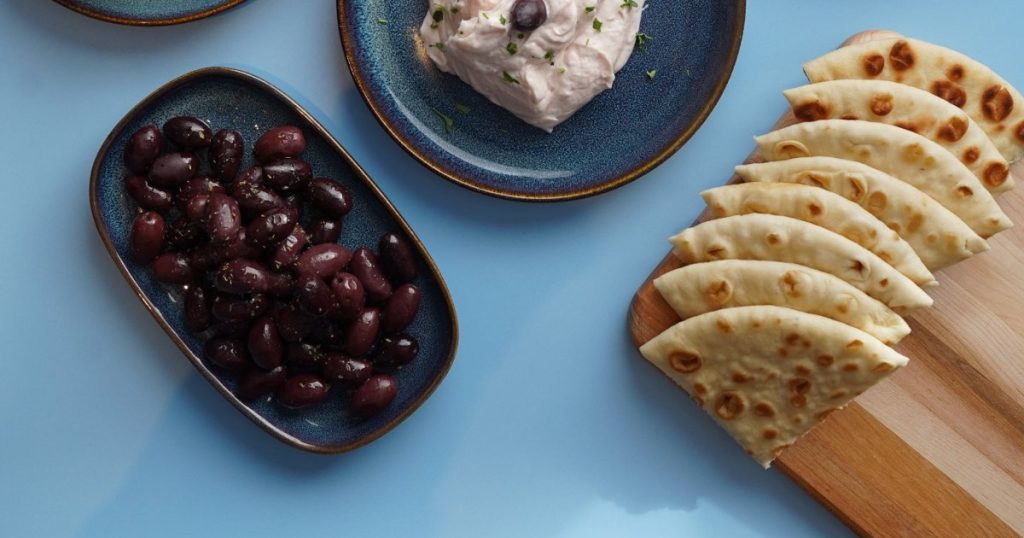
Mediterranean food is one of the most celebrated culinary traditions in the world, and for good reason. Italian, Lebanese, Turkish, Moroccan, and Spanish cuisines all share the same sun-drenched geography and many of the same core ingredients. But spend real time with Greek cuisine and something becomes clear: it does not feel like the others. Not because it is more complicated or more refined, but because it operates on a completely different set of principles.
Here are five real truths that explain exactly what makes Greek food distinct from every other Mediterranean cuisine and why those differences matter on every plate.
1. Greek Food Is the Freshest

Greek cuisine is built on a four-ingredient philosophy that leaves nowhere to hide. Olive oil, lemon, garlic, and oregano are the foundation of almost everything, and when your dish has four ingredients, every single one has to be exceptional. There are no complex spice blends to mask a mediocre protein, no heavy sauces to compensate for ingredients that are not at their best, and no long cooking processes that can rescue something that started poorly.
This structural simplicity is what makes freshness non-negotiable in authentic Greek food. The lemon must be freshly squeezed. The herbs must be fragrant and alive. The meat must have been marinated today. The tzatziki must have been made this service. In our kitchen at Souvlaki Authentique, that standard applies every single day across all seven of our Quebec locations because Greek cuisine gives us no other option. Freshness is not a selling point. It is the entire foundation the food stands on.
2. Lemon Is Everywhere and That Changes Everything
Every Mediterranean cuisine uses lemon as a finishing touch. A squeeze over pasta, a wedge alongside grilled fish, a dash in a salad dressing. Greek cuisine does something entirely different: it cooks with lemon as a primary ingredient, and the results are unlike anything else in the Mediterranean world.
Greek lemon potatoes are roasted in lemon juice for an extended period until the liquid absorbs completely into the potato. The lemon does not sit on top of the dish. It becomes the dish. The souvlaki marinade uses lemon juice to chemically tenderize the protein before it ever touches the grill, changing the texture and flavour from the inside out rather than the outside in.
This commitment to lemon as a structural cooking ingredient rather than a garnish produces a brightness and acidity in Greek food that no other Mediterranean cuisine quite replicates. It is the flavour signature that makes authentic Greek cuisine instantly recognizable from the first bite and completely impossible to confuse with anything else.
3. Everything Is Perfectly Grilled

Every great Mediterranean cuisine has a defining cooking instrument. Italian cuisine has the pasta pot and the wood-fired oven. Moroccan cuisine has the tagine. Spanish cuisine has the paella pan. Greek cuisine has the grill, and it takes the grill more seriously than any other Mediterranean tradition in the world.
The connection between Greek culture and grilled meat goes back thousands of years, to communal gatherings where skewered meat cooked over open flame was both the meal and the ritual. Souvlaki is not a modern fast-casual concept. It is a direct continuation of one of the oldest cooking traditions in human history. That heritage shows in how Greek cooking approaches the grill: with reverence, with discipline, and with the understanding that high heat applied to properly marinated fresh meat produces something that no other cooking method can replicate.
At Souvlaki Authentique, every protein is grilled fresh to order. The caramelization on the exterior, the juicy interior, the faint smokiness that carries the marinade through every bite: these are the results of grilling done properly, and they are the reason the best Greek food in Quebec tastes the way it does.
4. Dairy Shows Up Where You Would Never Expect It
Greek cuisine has a dairy creativity that surprises almost everyone who looks at it closely. Tzatziki is a yogurt-based sauce served alongside grilled meat, which is unusual enough in a global culinary context to feel completely specific to Greece. Feta is crumbled into salads and drizzled with olive oil as a standalone appetizer rather than melted as a topping. Halloumi is grilled directly over high heat as a protein in its own right, developing the same char and caramelization as meat.
No other Mediterranean food tradition uses cultured and aged dairy across this many different cooking functions. It appears in sauces, salads, grilled dishes, and soups, always doing something unexpected and always doing it in a way that is distinctly and unmistakably Greek.
5. Greek Food Is Always Communal
The Greek word philoxenia translates roughly as the love of strangers, the obligation of hospitality, the cultural principle that feeding someone well is one of the most genuine expressions of warmth and respect that exists. It is a concept embedded so deeply in Greek culture that it shapes not just how food is served but how it is thought about at every level.
Philoxenia is why the mezze platter goes in the centre of the table rather than in front of one person. It is why the lemon potatoes get passed around before anyone asks. It is why the portions are generous rather than precise. It is why a Greek table always feels like a gathering rather than just a meal.
At Souvlaki Authentique, philoxenia is not a concept we market. It is the reason our locations feel the way they do and the reason guests describe our restaurants as places they want to come back to rather than simply places they have been.
Conclusion
Greek cuisine stands apart from every other Mediterranean food tradition because it operates on principles that go deeper than ingredients or technique. Freshness as a structural requirement, lemon as a primary cooking ingredient, the grill as cultural heritage, dairy in unexpected places, and philoxenia as the soul of every meal: these are the five things that make Greek food genuinely different, and they are the five things we practice daily at every Souvlaki Authentique location across Quebec.
If you are looking for the best Greek restaurant in Quebec to experience all five in a single visit, we have seven locations ready to welcome you.
Frequently Asked Questions
Q1. What makes Greek food different from other Mediterranean cuisines?
Greek food is built on a four-ingredient simplicity that demands exceptional freshness at every level, uses lemon as a primary cooking ingredient rather than a finishing touch, centers the grill as its defining cooking instrument, incorporates dairy in unexpected and creative ways, and is shaped by the cultural principle of philoxenia, the Greek obligation of genuine hospitality and abundance. Together these five principles produce a cuisine that is immediately recognizable and impossible to confuse with any other Mediterranean food tradition.
Q2. Why is Greek food so fresh?
Greek cuisine uses so few ingredients in most dishes that freshness is structurally required rather than optional. When a souvlaki marinade has four components, each one has to be at its best because nothing else can compensate if one element falls short. This discipline around ingredient quality is what gives authentic Greek food its distinctive brightness and flavour depth.
Q3. What is philoxenia in Greek food culture?
Philoxenia is the Greek cultural principle of hospitality toward strangers, rooted in the belief that feeding someone well is one of the most meaningful acts of warmth and respect. At the table, it expresses itself through generous portions, shared dishes placed at the centre rather than served individually, and an atmosphere of abundance that makes every guest feel genuinely welcomed rather than simply served.
Q4. Is Greek food the healthiest Mediterranean cuisine?
Greek food is consistently recognized as one of the healthiest expressions of Mediterranean eating because it relies on olive oil rather than butter or processed fats, uses fresh herbs and lemon rather than heavy sauces, centers lean grilled proteins rather than fried ones, and incorporates fermented dairy like Greek yogurt that actively supports gut health. The Mediterranean diet, of which Greek cuisine is the most studied expression, has been ranked the number one diet in the world for seven consecutive years.